
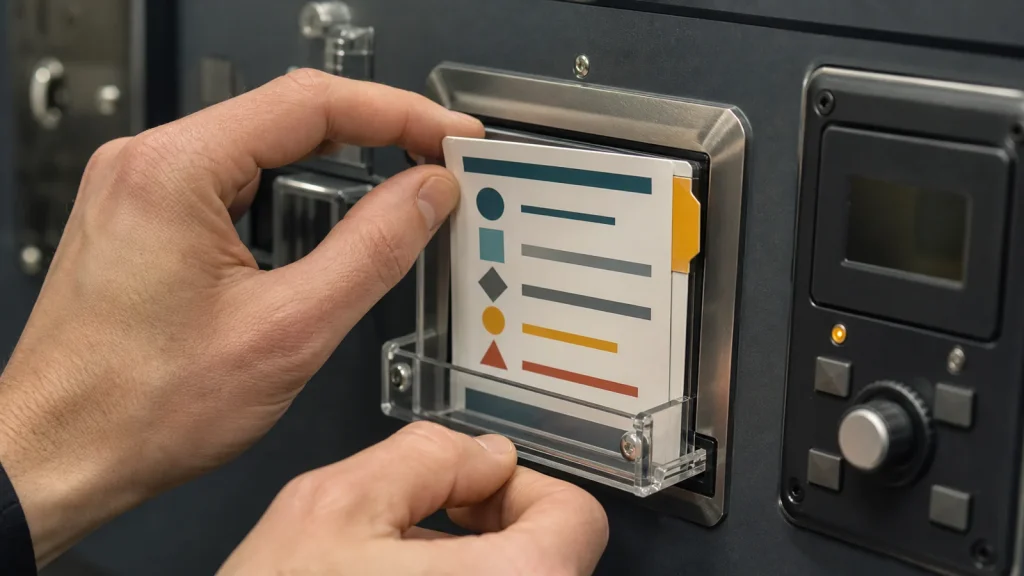
AI operating procedures belong inside the workflow because instructions that live outside the work rarely survive real pressure. A team can write a careful policy, build a smart assistant, and still create risk if the procedure is not visible when the system reads data, drafts an answer, asks for approval, escalates an exception, or updates another tool.
AI operating procedures should shape the workflow at the moment work happens, not sit in a disconnected policy document.
A useful procedure defines triggers, data rules, source quality, approval paths, exception handling, owners, and review loops.
Better prompts cannot replace missing procedures when the workflow needs judgment, accountability, or escalation.
The goal is to make safe behavior the default path through the system.
AI Operating Procedures Start With The Process
AI operating procedures should begin with the actual process the business wants to improve. Before writing prompt rules or policy language, the team needs to understand the trigger, input, decision points, systems involved, human responsibilities, failure cases, and expected output. The procedure should describe how the work moves.
This matters because AI systems often fail at the operating layer. The model may generate a reasonable response, but the workflow may give it incomplete data, stale source material, unclear permissions, or no escalation path. When that happens, the procedure should not depend on someone remembering a rule from a document they read weeks ago.
A practical starting point is the same one used in an AI automation readiness audit: inspect the workflow before choosing the tool. If the business cannot explain how a task should move from intake to completion, it is not ready to define useful AI operating procedures.
Procedures Should Be Designed As Workflow Controls
Procedures become useful when they appear as controls inside the workflow. A control can be a required field, a source-quality check, a confidence threshold, an approval step, an exception queue, a permission boundary, or a review reminder. The key is that the workflow enforces or exposes the procedure while the work is happening.
For example, a customer service assistant should not only have an instruction to use approved knowledge. The workflow should show which knowledge source was used, when it was last reviewed, whether the answer requires human approval, and where the case goes if the source does not cover the question. The procedure becomes part of the operating surface.
This is also where AI data boundaries become practical. A written rule that says an agent should not access sensitive records is weaker than a workflow that limits retrieval scope, records which source was used, and blocks actions that exceed the system’s role.
Better Prompts Cannot Replace Operating Rules
Better prompts can improve consistency, but prompts cannot carry every operating responsibility. A prompt can remind an AI assistant to be careful. It cannot reliably define who owns an exception, which record is authoritative, when a customer message needs approval, or how the team reviews outcomes over time.
Operating rules should answer questions such as:
- What event starts the workflow?
- Which sources are allowed, and who owns their quality?
- Which actions can happen automatically?
- Which actions require human review?
- What information must be captured before the workflow continues?
- What conditions force escalation?
- Who reviews exceptions and recurring failures?
- How does the team measure whether the procedure works?
Those rules may inform the prompt, but they should not live only in the prompt. They belong in the system design. If a procedure matters to the business, the workflow should make it visible, enforceable, or reviewable.
Human Review Needs Clear Criteria
Human review works best when operators know what they are reviewing and why. A vague instruction to keep a person in the loop can slow the workflow without improving quality. Clear review criteria tell the operator what risk to inspect, what evidence to use, and what decision they are allowed to make.
A review step might ask the operator to confirm source accuracy, approve customer-facing language, check a sensitive record update, or resolve a conflict between two pieces of data. Each of those tasks needs a different procedure. The reviewer should not have to infer the job from a generic approval button.
This is why human review for AI agents needs to be designed into the workflow. The review should create a record, improve future decisions, and make accountability clear. Otherwise the review path becomes a bottleneck with no learning loop.
Exception Handling Is Part Of The Procedure
Exception handling should not be an afterthought. The easiest cases often make an AI workflow look more capable than it is. Missing data, unusual requests, stale source material, conflicting instructions, privacy limits, and unclear approvals reveal whether the procedure can protect the business when the standard path breaks.
A good procedure defines the moment the system should stop, ask for context, route the case, or refuse to act. It should also define who owns the exception, what information must travel with it, and how recurring exceptions get reviewed. Without that structure, operators absorb the mess manually.
That is why the automation exception path deserves the same attention as the happy path. A workflow that handles exceptions cleanly can earn more trust. A workflow that hides exceptions creates operational debt.
Procedures Need Evidence, Not Just Intent
Procedures need evidence because teams improve systems by seeing what actually happened. The workflow should record sources, approvals, escalations, overrides, failures, and outcomes when those events carry operational meaning. Without that evidence, the team can only debate whether the procedure seemed reasonable in theory.
The NIST AI Risk Management Framework helps frame this point because it treats AI risk management as an ongoing practice of governance, mapping, measurement, and management. In practical business terms, that means procedures need enough evidence for people to evaluate behavior and improve controls.
This also connects to AI workflow audit trails. A procedure that cannot be audited is hard to trust. The business should be able to see what the system did, which procedure shaped the decision, and where a person intervened.
Keep A Procedure Register For The Workflow
A procedure register gives the team one practical place to track the rules that shape the workflow. It does not need to be complex. For each AI-assisted process, the register should name the workflow owner, approved sources, allowed actions, review triggers, escalation rules, measurement points, and the date of the last review.
The register matters because procedures drift. A source changes, a service offer changes, a reviewer leaves, a new exception appears, or a downstream system changes its required fields. When that happens, the workflow needs a visible maintenance path. Otherwise the team keeps trusting procedures that no longer match the work.
Make The Procedure Easy To Follow
The best AI operating procedures are not long documents that operators must interpret under pressure. They are clear paths through the work. They reduce ambiguity, expose the next step, and help people make consistent decisions without pretending every case can be fully automated.
A practical procedure starts with one bounded workflow. Define the trigger, source rules, action limits, approval criteria, exception path, audit trail, and review rhythm. Build those decisions into the operating surface. Then inspect the evidence and improve the procedure as the workflow encounters real cases.
Eckman Design treats AI operating procedures as part of system design. The goal is not to slow useful automation with excessive process. The goal is to make reliable behavior easier than risky behavior, so the business can use AI with clearer ownership and less operational guesswork.