
Your first AI automation project should not be the most ambitious idea in the room.
It should be the one with the clearest pain.
Many businesses start too big. They imagine a fully automated department, a digital employee, or an AI system that handles everything from intake to execution.
That kind of vision may be useful later. However, the first project should usually be smaller: small enough to ship, visible enough to matter, and painful enough that people care when it improves.
Start Where the Problem Is Obvious.
The best starting point is often the workflow everyone already complains about.
It might be intake. It might be reporting. It might be content updates. It might be customer responses. It might be internal approvals. It might be a spreadsheet that has become more important than anyone wants to admit.
The right first AI automation project usually has a few signs. The work happens often. The steps are somewhat repeatable. The process annoys the team. The outcome is easy to recognize. Most importantly, a human can review the output before anything final happens.
That is a good place to begin because the business already understands the friction. The project does not need to prove that a problem exists. It needs to prove that the workflow can become easier to run.
Do Not Automate the Whole Department First.
Big AI projects create big uncertainty.
They involve more systems, more stakeholders, more exceptions, more approval concerns, and more ways to fail. They also make it harder to know what actually caused the result, good or bad.
A smaller project gives the team a chance to learn. How clean is the data? Where do people need review? What should the AI be allowed to do? Which outputs are useful? What breaks in practice? What does the team actually trust?
These lessons are hard to predict in a strategy meeting. They become clear when a real workflow is built, used, reviewed, and improved.
IBM makes a similar point about moving beyond generative AI pilots: start with real operational friction and use measurable, testable workflows before trying to scale. That is practical advice even outside manufacturing.
Look for Repeatable Judgment.
AI is especially useful where work requires repeated judgment, but not necessarily final authority.
For example, AI can classify incoming requests, summarize long messages, draft first responses, check whether required information is missing, turn notes into structured records, prepare content for review, compare submitted information against rules, or create a first-pass recommendation.
These tasks still benefit from human review. However, AI can reduce the manual work needed to get to that review point.
That is the right balance for many first projects. The system helps prepare the work, but a person still approves the final action.
Make Success Easy to See.
A first AI automation project should have a clear before and after.
Before, the team spends too much time sorting requests, chasing information, drafting repetitive content, or updating records manually. After, the work arrives in a cleaner format, the next step is clearer, and the human reviewer has less repetitive work to do.
The metric does not need to be complicated. It might be fewer follow-ups, faster review, fewer missed details, less time spent copying information, or a more consistent final output.
Visibility matters because it builds confidence. When people can see the improvement, they are more likely to trust the system and help refine it.
Build Trust Before Scaling.
The first project is not just about saving time. It is about building trust.
The team needs to see that AI can be useful without being reckless. Leaders need to see that it can fit into real operations. Operators need to see that it helps rather than creates more work.
Trust is easier to build with a focused project. The boundaries are clearer. The review process is easier to define. The failure cases are easier to spot. The results are easier to discuss.
Once the first workflow works, the business can expand from there. The next project can reuse what the team learned about data quality, approvals, prompts, integrations, and ownership.
Start Smaller Than the Vision.
A strong AI strategy can be ambitious. The first implementation should be practical.
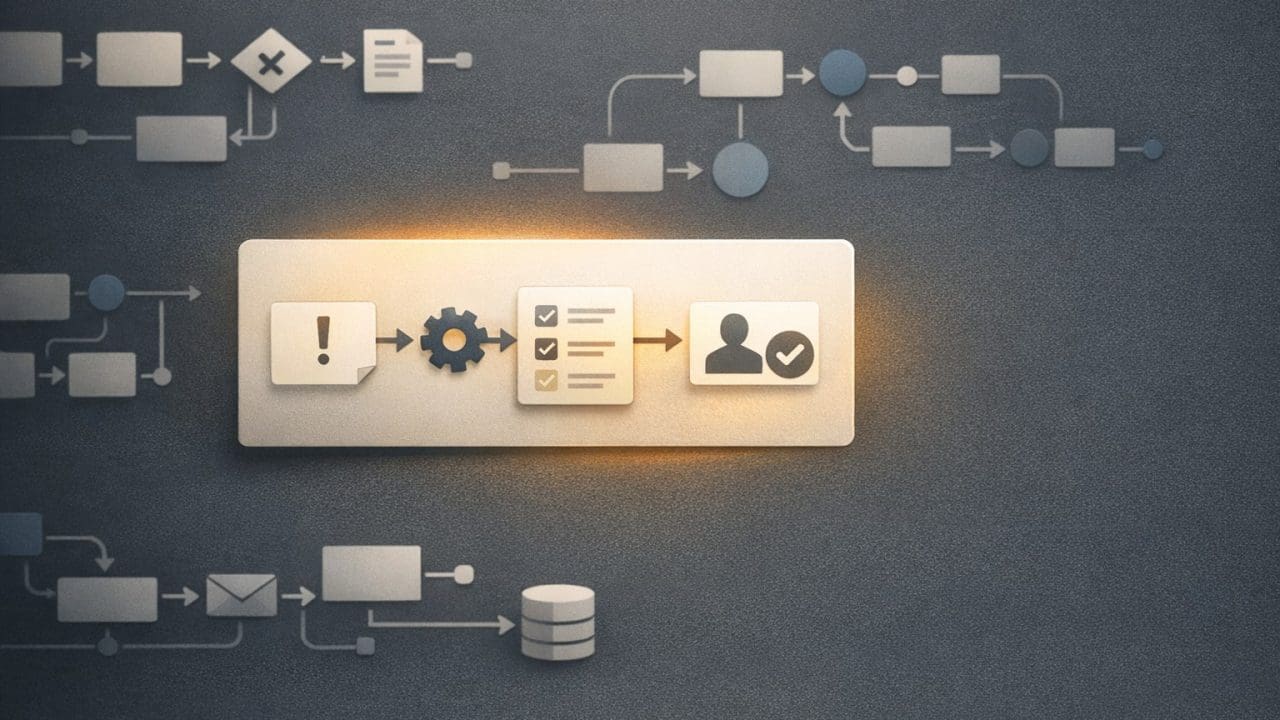
Pick one workflow. Map the process. Define the boundaries. Build the first version. Put a human review step in place. Measure whether it helps.
That is how AI moves from idea to operating value.
A small project does not mean a small opportunity. It means the business is choosing a problem it can understand, improve, and learn from before expanding the system.
This is the same practical approach behind Eckman Design’s work on AI automation and operational systems: start with the work, prove value in a real workflow, and build from there.
Eckman Design helps businesses identify practical first AI automation projects and turn them into working systems.
Discussion
0 Comments